
Introduction: Why Affordable Health Insurance Matters Now
Imagine falling sick tomorrow and discovering you can’t afford proper treatment. That’s a fear many face in Nigeria, Kenya, and Ghana. Even a minor hospitalization can drain savings and push families into debt.
Yet, health insurance is often seen as a luxury — expensive, confusing, or unreliable. But the truth is: affordable health insurance can and does exist — with thoughtful planning, clever choices, and understanding your options.
This post will help you:
- Understand the pain points many people face in these countries
- Compare public vs private vs hybrid schemes
- See specific examples of affordable or subsidized options
- Know smart strategies to stretch your coverage
- Decide what fits your needs
Whether you’re a salaried worker, freelancer, small-business owner, or family head, this guide speaks to you.
Common Pain Points (and Why People Avoid Insurance)
Before diving in, let’s name the real anxieties people have regarding health insurance in Nigeria, Kenya, and Ghana. Addressing them helps you see where you can gain advantage.
| Pain Point | Why It Matters | Typical Consequence |
|---|---|---|
| High premiums | Many plans demand surprisingly high monthly fees | People skip insurance; pay out-of-pocket later |
| Hidden exclusions & caps | Policies may exclude pre-existing conditions, maternity, or critical illnesses | You think you are covered — but claims get denied |
| Poor provider networks | Many hospitals or clinics are excluded, or in remote areas | You travel far for care or pay cash despite being insured |
| Complicated claims & reimbursement | Delays, paperwork, or upfront payments frustrate users | People abandon claims or avoid using the coverage |
| Low awareness & trust | Many don’t understand how insurance works or distrust insurers | Uptake remains low, even when plans exist |
As one study noted, health insurance in Nigeria, Kenya, and Tanzania has been introduced but often only for public sector workers; many in private or informal sectors remain uninsured. (PMC)
Another research suggests that in Ghana, Kenya, and Nigeria, insurance coverage rates vary widely — and many people still have no protection when they need it most. (PMC)
So let’s move from pain to possibility: where affordable, effective options do exist.
Public & Social Health Insurance Schemes
One of the best places to start is with government-supported or social health insurance programs. These often provide a baseline of coverage at lower cost (though with trade-offs).
Nigeria: National Health Insurance Scheme (NHIS) + State Schemes
Nigeria’s NHIS was created in 1999 and launched in 2005 as a tool toward Universal Health Coverage. (PMC) But its reach is limited: by some estimates, only around 39 % of Nigerians are covered (and many only partially). (PMC)
Key features & limitations:
- Typically tied to public-sector employees or formal employment
- Benefits may include primary care, hospitalization, diagnostics
- Many private or remote facilities are excluded
- Low uptake and awareness are major barriers
- Several states (e.g. Kwara, Lagos) now run their own schemes to fill gaps. (PharmAccess)
- For instance, the Kwara State Health Insurance Scheme (KWSHIS) and Lagos State Health Scheme aim to bring more people into affordable coverage. (PharmAccess)
- In Osun State, the Osun Health Insurance Scheme (O’HIS) operates to reduce burden for lower-income residents. (Wikipedia)
While NHIS gives a foundation, it often leaves gaps. That’s where hybrid or private plans become relevant.
Kenya: NHIF → Social Health Authority (SHA)
Kenya has long used the National Hospital Insurance Fund (NHIF) as its public insurer. But as of late 2023, NHIF was replaced by a new body, the Social Health Authority (SHA) — launched to streamline and enhance social health insurance. (Wikipedia)
Key points:
- SHA divides public cover into three schemes: Primary Healthcare Fund, Social Health Insurance Fund, and an Emergency/Chronic Illness Fund. (Wikipedia)
- Employers are required to contribute — but if a private insurer offers equal or better medical cover, the employer may apply for exemption. (Mercer)
- Public scheme benefits are often basic — for more comprehensive care people may still need private/top-up cover. (Pacific Prime)
Ghana: National Health Insurance Scheme (NHIS)
Ghana has one of the more developed national schemes in the region. Its NHIS is organized around districts, with premiums and membership options adjusted by income and region. (PMC)
Some positives:
- Many routine services (incl. outpatient, maternal care, essential drugs) are included
- Users report that being in NHIS encourages more timely use of formal care vs informal or traditional healing routes (PMC)
- But challenges remain: delays in reimbursements to providers; variability in coverage; and some services (e.g. advanced surgeries, specialized care) may be excluded or only partially covered. (PMC)
In summary: public and social health insurance schemes are valuable and relatively affordable; but they often fall short of full protection. Many residents must supplement them.
Private & International Health Insurance: Getting More Coverage
To fill gaps in public schemes, many individuals turn to private or international health insurance. These come at higher cost, but they offer flexibility, better networks, and wider benefits.
Key players & features in the region
Here are some types of private/international plans you may find in Nigeria, Kenya, Ghana:
- Regional/global insurers such as Cigna, IMG, April, AXA offer plans adapted for Africa.
- For instance, Cigna Africa offers inpatient, outpatient, maternity, wellness, evacuation coverage. (ghb.cigna.com)
- IMG offers plans in Ghana, with coverage limits up to USD 8 million, direct billing, and flexible deductibles. (Pacific Prime)
- AXA Global Healthcare provides global health cover, mental health support, and fast claims processing. (AXA – Global Healthcare)
- Local private insurers / HMOs
In each country, local insurance firms and Health Maintenance Organizations (HMOs) may offer tailored plans. These may have lower premiums but more restricted coverage or networks. - Hybrid / top-up plans
These are supplementary policies designed to complement public coverage. You pay less for “add-on” benefits (e.g. advanced surgeries, private hospital rooms). - Micro-insurance / community-based plans
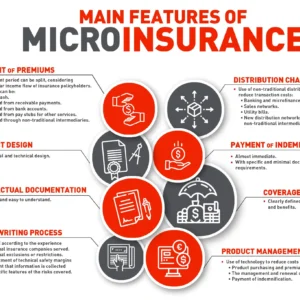
Some NGOs or cooperatives run small-scale insurance models aimed at low-income populations, with monthly or even daily micro premiums. These are less common, but pilot models exist across Africa.
Pros & cons of private / international plans
| Advantage | Challenge / Trade-off |
|---|---|
| Wider hospital and specialist network | Higher premium cost |
| Better benefits (e.g. maternity, mental health, evacuation) | May have waiting periods or exclusions |
| Stronger claims & customer service | Requires thorough reading and comparison |
| Flexibility, portability | Private care can still require co-payments or upfront payments |
A tricky balance is needed: you want value for premium, not just expensive policies with unused benefits.
Comparative Snapshot: Nigeria vs Kenya vs Ghana
Below is a comparison of features, coverage, and challenges across the three countries to help you see where your opportunities lie.
| Feature | Nigeria | Kenya | Ghana |
|---|---|---|---|
| Public/social scheme | NHIS (limited) + states schemes | SHA (replacing NHIF) | NHIS (well-established) |
| Coverage penetration | Very low (≈ 3–10 % formally covered in some states) (PharmAccess) | Better in some formal sectors, but many informal workers still uninsured | Relatively higher uptake, though service gaps exist (PMC) |
| Network strength | Urban private hospitals often excluded or out-of-network | Private hospitals common; public facilities basic | Wider network, though specialist and tertiary centres may be far |
| Private / international options | Many HMOs, regional insurers, and international plans | Many international insurers; top-up plans common | Several global insurers operate actively, local insurers too (Expat Financial) |
| Affordability challenge | Premiums heavy for many; hidden costs | Public scheme affordable but limited; private costly | Premiums more manageable; government subsidies help |
| Trust & awareness | Low awareness; distrust of insurers | Growing awareness, but claims skepticism | Comparatively better trust, but still gaps in provider reimbursement |
From this snapshot, you can see that Ghana often presents the “easiest land” for combining public and private coverage effectively. Kenya is innovating with its new SHA structure. Nigeria presents the toughest terrain — but state schemes and smart private plans can make a meaningful difference.
How to Find (Truly) Affordable Plans: Smart Strategies
Now that you understand options, here’s how you can find health insurance that doesn’t break the bank — while still giving you meaningful protection.
1. Start with public/social coverage, then layer
- Enroll in NHIS, SHA, or NHIS (depending on your country) for basic coverage
- Use that as your foundation before taking on additional plans
- That way, you don’t pay twice for core services
2. Choose a top-up or supplementary plan
Instead of full private coverage, get a plan that only covers:
- Advanced surgeries
- Elective or specialist treatment
- Private hospital room upgrade
- Critical illness or cancer coverage
These cost less because they “fill gaps,” not duplicate.
3. Limit your geographical scope
If you live in a major city, you might restrict network to nearby hospitals rather than national coverage. That lowers cost. But ensure emergency / evacuation cover is included.
4. Use higher deductible / co-pay options (with caution)
By accepting a small deductible or co-payment when you use services, insurers reduce your premium. But only choose this if you have some buffer to cover small amounts out-of-pocket.
5. Choose age-appropriate, modular plans
Don’t pay for maternity if you don’t need it; don’t pay for senior care if you’re young. Many insurers allow customizing add-ons.
6. Compare and negotiate
Don’t accept the first quote. Use multiple insurers, ask for discounts (group, family, employer), read fine print. In Nigeria, AI-based recommender tools are beginning to help match people to affordable HMO plans. (arXiv)
7. Pay annually or semi-annually
Some insurers offer discounts when you pay for the full year or six months upfront, rather than monthly installments.
8. Stay healthy, reduce risk factors
Some plans reward you for wellness commitments (e.g. no smoking, regular check-ups). Reducing your risk profile can lower premiums.
Examples of More Affordable or Innovative Models
Here are a few real-world examples or models that demonstrate more accessible health insurance in the region:
- Kwara State & Lagos State, Nigeria — their state health schemes aim to enroll large numbers at subsidized rates, particularly targeting lower-income populations. (PharmAccess)
- Osun Health Insurance Scheme (O’HIS) — a state-level scheme aiming to reduce catastrophic healthcare costs for vulnerable citizens. (Wikipedia)
- Community-based micro-insurance pilots — in pockets across Africa, some NGOs and cooperatives offer daily or weekly micro premiums linked to local clinics. These are not always robust or nationwide, but signal potential.
- Global insurers with localized plans — e.g. Cigna, AXA, IMG offering localized Africa plans with lower cost bases.
- For instance, Cigna Africa has tailored plans covering inpatient, outpatient, maternity, evacuation. (ghb.cigna.com)
- AXA Global Healthcare lets you pick flexible cover levels, virtual doctor, and direct claims. (AXA – Global Healthcare)
When you see these models, note what makes them less expensive (e.g. limited scope, subsidized funding, group discounts). Then see if you can mimic that in your own decisions.
What to Watch Out For (Red Flags & Pitfalls)
Affordable is good — but “cheap” can become harmful if coverage is useless. Here are red flags to watch:
- Excessive exclusions
Watch out for “exclusion for pre-existing conditions, mental health, maternity, chronic diseases” — sometimes insurers bury them deep in fine print. - Small coverage caps or annual limits
A policy may limit coverage to a low ceiling (e.g. USD 10,000) which is useless if you need major surgery. - Poor or shrinking network
If your preferred hospital is excluded, you’ll still pay out-of-pocket or travel far. - Hidden co-payments / co-insurance
Some plans require you pay 20–30 % at point of service — that can kill your budget. - Poor claims record / delayed reimbursements
An insurer may delay payment or demand excessive paperwork, making your coverage less practical. - No emergency or evacuation coverage
In severe cases, local care might be inadequate — good plans should include emergency transfer or repatriation. - Rigid renewal with high age-based increases
A plan may look cheap now — but spike massively when you age or renew.
Before finalizing, ask:
- What is excluded?
- Which hospitals are in network?
- How fast are claims settled?
- What is the maximum benefit / cap?
- Is evacuation included?
- How does renewal premium grow?
Step-by-Step to Choose the Right Plan
Here’s a practical checklist to guide your selection process:
- List your health priorities
(e.g. maternity, chronic disease, specialty care, family coverage) - Check your country’s public/social scheme
Understand what NHIS / SHA / NHIS already gives you. - Compute your budget
What can you afford monthly or annually without stress? - Get multiple quotes
From local HMOs, global insurers, and hybrid plans. - Review plan details side-by-side
Use a comparison table (fees, benefits, network, exclusions). - Test insurer reputation
Seek reviews, ask others, see claim settlement behavior. - Negotiate or seek discounts
Family plan, group plan, company-sponsored schemes, early payment. - Start with a trial period if possible
Some plans allow short-term trial or cooling period to cancel. - Maintain wellness and keep records
Good health, preventive check-ups, and medical records help minimize claims. - Review annually
As your health and priorities change, so should your coverage.
Mobile & Digital Trends: Making Insurance More Accessible
To stay optimally affordable and user-friendly, many insurers now leverage digital tools:
- Mobile apps & e-claims
Submit claims or track status via phone, reducing paperwork. - Telemedicine / virtual consultations
Avoid hospital visits and get care remotely — many insurance plans now bundle this. - AI matching tools
In Nigeria, tools using machine learning help users filter HMOs that match their needs and budget. (arXiv) - Pay-as-you-go / micro payments
Some insurers experiment with paying daily or weekly small amounts — aligning with irregular income flows.
These trends help reduce overhead (for insurers) and cost for users, improving trust and uptake.
Sample Scenario Comparisons
Let’s consider three fictional users — a guide to what might suit their needs.
Scenario A: Jane, 30-year-old professional in Lagos
- Has stable income, no chronic illness
- Needs maternity coverage in future
- Wants access to good hospitals in Lagos
Best approach:
- Join state scheme or NHIS base
- Add a private top-up for maternity, specialist care, evacuation
- Choose a plan with Lagos hospital network
- Use annual payment discount
Scenario B: Samuel, 45, in rural Kenya, informal business
- Income fluctuates month to month
- No employer scheme
- Nearest major hospital is distant
Best approach:
- Enroll in SHA / public coverage
- Add micro-insurance for serious illness / surgery
- Use a regional insurer with mobile claims & robust network
- Opt for telemedicine to reduce travel cost
Scenario C: Ama, 25, in Accra, expecting a baby
- Needs good maternal care
- Wants comprehensive prenatal + delivery + postnatal
Best approach:
- Use NHIS coverage for standard maternity
- Add private maternity rider or international plan
- Ensure hospital is in network and emergency transfer is covered
These scenarios show how a “one size fits all” doesn’t apply — your plans should respond to your personal situation.
Final Thoughts & Key Takeaways
Affordable health insurance in Nigeria, Kenya, and Ghana is not a myth — but it requires careful navigation.
- Public and social schemes provide a starting safety net
- True protection often needs private or hybrid plans
- Smart strategies (top-ups, deductibles, network scope) help optimize cost
- Always read the fine print: exclusions, caps, network, claims record
- Leverage mobile digital tools for ease and lower overhead
- Review your plan regularly as your needs change
You deserve peace of mind that a health emergency won’t bankrupt you. With the knowledge here, you are better equipped to choose a plan that balances affordability and effectiveness — not one that looks cheap but fails when you need it most.
FAQs
1. How much does health insurance cost in Nigeria, Kenya, or Ghana?
Costs vary widely depending on coverage, age, scope, network. Basic public scheme contributions may be minimal, while private plans can cost from tens to a few hundreds of dollars per month (or equivalent local currency). Always compare quotes and scale features to your priority.
2. Can I combine public health scheme and private insurance?
Yes — combining them is often wise. Use the public scheme as your foundation, and get private or top-up coverage to fill gaps (e.g. surgeries, specialist care, maternity, evacuation).
3. Are pre-existing conditions always excluded?
Not always. Some insurers allow coverage for pre-existing conditions (after waiting periods or additional premium). Always check the policy’s terms about pre-existing conditions.
4. What happens if I change location within the country?
Many plans are national. But if your insurer’s network is regional, moving may restrict your hospital choices. If switching to another country (e.g. moving from Nigeria to Kenya), you might need a new policy or portable international coverage.
5. Is private insurance worth it if I rarely visit hospitals?
Yes — the value isn’t just in usage but in risk protection. Even if you rarely use services, a serious illness or accident can create massive costs. Insurance helps spread that risk.