
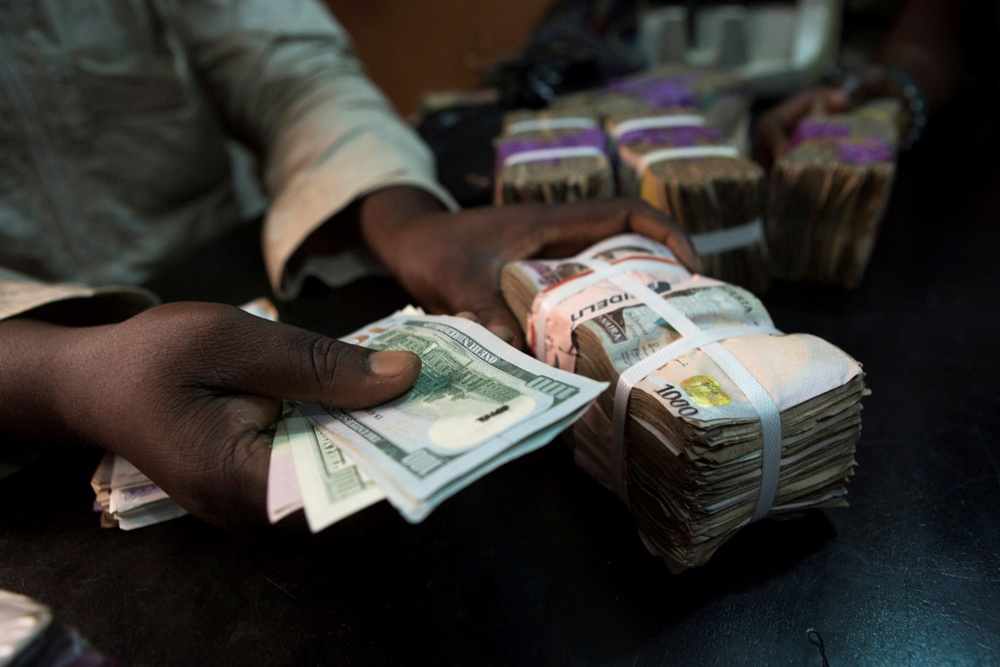

“If you can’t get dollars, you can’t feed your family, you can’t run your business — everything becomes harder.”
— a sentiment echoed on many African streets today
The idea of suddenly not having enough U.S. dollars may sound academic or distant to many. But for millions of Africans, “dollar scarcity” has become a brutal reality. It ripples through the economy and daily life — driving up costs, stifling businesses, and squeezing household budgets. In this post, we’ll explore why the dollar is under pressure, how scarcity manifests on the ground, and — crucially — what everyday people can do to protect themselves.
Though the dollar is central to global finance, the pain of its shortage is especially acute across Africa. We’ll also contrast some effects in the U.S. and Canada to draw lessons and offer perspective.
What Exactly Is “Dollar Scarcity”?
Before we dig deeper, let’s clarify:
- Dollar scarcity means there is insufficient access to U.S. dollars in local economies — whether in banks, for businesses, or through foreign exchange channels.
- In practice, it occurs when demand for dollars outstrips supply, leading to steep premiums, wide spreads between “official” and “parallel” exchange rates, and liquidity constraints for importers.
- It’s different from a “weak currency” — scarcity is about access, not just valuation.
In many African countries, dependence on the U.S. dollar is baked into trade, debt, and import systems. When that supply is strained, the effects cascade through the economy.
Why Is the Dollar Running Dry in Africa?
Several converging forces create this scarcity. Here are the main culprits:
- Heavy reliance on dollar-denominated imports and debt
Many essential imports—fuel, medicines, machinery—are priced in dollars. Also, some governments and companies have borrowed in USD. When local currency weakens or foreign reserves run low, servicing those debts becomes harder. (Ecofin Agency) - Outflows exceeding inflows
Trade deficits (importing more than exporting), capital flight, and profit repatriation pressurize dollar reserves. (The Business Weekly & Review) - Volatile global environment & U.S. monetary policy
When the U.S. Federal Reserve raises interest rates, capital tends to flow into the U.S., strengthening the dollar and making it harder for emerging economies to retain or attract it. (World Finance) - Shrinking remittances & slower capital flows
Remittances are a crucial dollar source for many African homes. While remittances to Africa have grown in recent years, their growth is vulnerable to global shocks. (African Futures) - Depleted foreign reserves
To defend local currencies, central banks often dip into reserves. In many cases, reserves are dwindling, leaving fewer buffers to meet dollar demand. (World Bank Blogs) - Structural innovation toward de-dollarization
Some African nations and institutions are deliberately reducing dependence on the dollar by promoting local currency trade or alternative payment systems (e.g., the Pan-African Payments and Settlements System). (Ecofin Agency)
Because these pressures reinforce one another, scarcity can become self-amplifying: lower reserves make the local currency weaker, which increases dollar demand, which drains more reserves, and the cycle continues. (World Bank Blogs)
How Dollar Scarcity Hits Everyday Lives
It’s not just macroeconomics. Below are how ordinary citizens and businesses feel the impact:
Pain Points for Individuals & Households
- Rising import costs and inflation
When dollars become harder to access, essential imports cost more. That pushes general price levels up. (IMF) - Higher cost of medical drugs, fuel, and food
These are often imported or rely on imported inputs. Shortages in foreign exchange can triple medication costs in some places. (The Business Weekly & Review) - Difficulty accessing foreign goods or services
Whether subscriptions, travel, education fees denominated in USD — people may be shut out or forced to pay a huge premium. - Remittance squeeze
When dollars are scarce, sending or receiving remittances becomes costlier or slower. - Exchange rate complexity
Many countries have multiple rates (official vs. parallel). Ordinary citizens often must use the black-market or “grey” rates to convert money, losing value.
Pain Points for Businesses & Entrepreneurs
- Importers and manufacturers under strain
Businesses that rely on imported raw materials struggle to get the dollars they need, or pay exorbitant premiums. - Debt servicing becomes unaffordable
Firms with dollar-denominated debt are crushed by currency weakness and rising interest. - Liquidity constraints and credit squeeze
Banks may hoard foreign currency, making it difficult for businesses to access credit or loans in dollars. - Margin erosion and profitability collapse
As costs rise unpredictably, businesses shrink margins or lose money. - Supply chain disruptions and unpredictability
Delays in accessing foreign exchange means delays in goods delivery, inventory shortages, or canceled deals.
A Tale of Two Regions: U.S. / Canada vs Africa
It may be helpful to compare how dollar scarcity or tight dollar conditions manifest in North America versus Africa. While scarcity is rarely the issue in the U.S. or Canada (since the dollar is their home currency or trading partner), certain pressures or analogues exist.
| Feature / Issue | U.S. / Canada | African Countries | Implication & Takeaway |
|---|---|---|---|
| Currency control | Issuers of their own currency; not reliant on foreign exchange | Many rely on foreign currencies for trade, debt, imports | Africa is more vulnerable to external shocks |
| Interest rate effects | Fed / BoC decide rates, affecting borrowing cost locally | Global rate hikes attract capital away from Africa, strengthening USD | Africa must balance between inflation control and currency stability |
| Dollar dominance | U.S. dollar is domestic or a target currency | Dollar is foreign but pervasive in trade, reserves, debt | Dollar scarcity hits harder in Africa |
| Access to finance | Deep capital markets, ability to borrow in local terms | Some States must borrow in USD or foreign currencies | Currency mismatch risk is huge in Africa |
| Trade corridors | Many trade in local currency or USD, but infrastructure is robust | Trade often depends on USD settlement even between African countries | Transaction costs and foreign exchange burden are higher in Africa |
The key lesson: in North America, currency is a tool controlled domestically. In many African nations, the dollar is an external constraint. That asymmetry is central to understanding the crisis.
Where the Pressure Points Are Strongest
Certain sectors and groups feel the pain more intensely:
- Medical & pharmaceutical — reliance on imported drugs means price shock when dollars dry.
- Energy / fuel importers — countries without local oil/gas face high vulnerability.
- Education & training abroad — students paying fees denominated in USD or foreign currency feel big jumps.
- Small & medium enterprises (SMEs) — lower capital buffers make them especially fragile.
- Urban households — often more consumption of imported goods; rural households might be less exposed (though still impacted via inflation).
Real Examples & Recent Cases
- In Nigeria, the government has allocated scarce dollars and seen wildly fluctuating official vs. parallel exchange rates, making life unpredictable for businesses and consumers alike.
- Kenya, Ghana, Zambia, and Mozambique have also reported tight U.S. dollar liquidity. (Global Trade Review (GTR))
- Many African states are experimenting with local currency trade with countries like China and India to reduce dollar demand. (Ecofin Agency)
- The Pan-African Payments and Settlements System (PAPSS) allows African countries to trade using local currencies, avoiding the dollar intermediary. (Reuters)
- The African Development Bank has floated a new “African Units of Account” concept—backed by critical minerals—in part to lessen dependence on the dollar. (Reuters)
These show that the problem is permeating policy decisions, corporate strategies, and even long-term institutional design.
Coping Strategies for Households & Businesses
Though the forces are large, there are practical things people and enterprises can do.
For Households & Individuals
- Diversify income streams
Look for ways to earn in stronger currencies (e.g. freelancing for global clients, remote work). - Reduce dependency on imported goods
Favor local brands, grow food if possible, source domestically. - Be smart with currency conversion
Use remittance platforms or currency exchanges with favorable rates; avoid unnecessary conversions. - Hold savings in mixed assets
Rather than just local currency cash, consider dollar or other safe assets (if legal and feasible). - Negotiate contracts carefully
If paying for services or goods abroad, clarify exchange risk and who bears it.
For Businesses & Entrepreneurs
- Hedge currency exposure where possible
Use forward contracts or options (if available) to lock in rates. - Invoice in local currency
When possible, demand contracts denominated in your own currency or share the risk. - Localize supply chains
Source more inputs domestically to reduce dollar reliance. - Seek local-currency financing
Borrow in local currency rather than USD, when that is viable. - Explore regional trade
Use systems like PAPSS to trade with neighboring countries in local currencies. (Reuters) - Maintain foreign reserves reserves/float buffer
If you run a business with some foreign reserves, keep a buffer for crisis times.
Longer-Term Solutions: What Needs to Change
Structural reforms and institutional innovations are essential. Here are key shifts that can help reduce vulnerability:
- Strengthen local currencies and institutions
A stable, predictable monetary policy gives confidence to local currency holdings. - Regional trade & currency systems
Increasing trade between African countries using local currencies (via PAPSS and AfCFTA) reduces dollar demand. (Reuters) - Currency-swap agreements & alternative settlements
Countries can agree to settle trade in each other’s currencies or via clearinghouses. - Diversify reserve holdings
Instead of holding only dollars, central banks can hold euros, yuan, gold, etc. (this trend is already underway). (Ecofin Agency) - New de-dollarization instruments
Concepts like Africa’s proposed units-of-account backed by critical minerals aim to offer a stable medium of exchange. (Reuters) - Fiscal discipline and debt management
Avoid over-reliance on external debt. Seek to borrow in local currency to reduce mismatch risk. - Promote export capacity & value-add
Boosting exports generates dollar inflows, reducing the net weakness.
These are heavy lifts, not quick fixes. But gradually, they can shift the structural dependency on the dollar.
Staying Resilient in Tough Times
Here are tips to weather the storm while systemic reforms are underway:
- Stay informed: monitor central bank announcements and foreign exchange trends.
- Build flexibility: avoid rigid plans that assume currency stability.
- Incremental adjustment: small changes (e.g. shifting some contracts to local currency) can reduce exposure.
- Network with peers: share best practices for sourcing, finance, and risk mitigation.
- Engage policymakers: support reforms that promote local currency strength and innovation.
Final Thoughts
Dollar scarcity is not a temporary nuisance — it’s a systemic challenge with real human consequences. For everyday Africans, it’s felt in higher prices, tense business margins, and financial unpredictability. But the crisis also presents opportunities: to reclaim more control over regional trade, strengthen currencies, and redesign policies in more locally grounded ways.
While the U.S. and Canada don’t face dollar scarcity in the same sense, their monetary actions ripple globally — so what happens in Washington or Ottawa matters to people in Lagos, Nairobi, or Accra. As global realignments accelerate, Africans have a window to build more resilient financial systems.
The journey won’t be easy. But by combining household-level prudence, business flexibility, and bold institutional reforms, everyday Africans can not only survive but position for a more sovereign and stable economic future.
Frequently Asked Questions (FAQs)
1. Why is the U.S. dollar so dominant globally?
Because it’s the world’s primary reserve currency, used as the benchmark in trade, debt, and finance. Many nations and institutions trust its stability, which perpetuates its dominance.
2. Can African countries just abandon the dollar entirely?
Not overnight — many obligations (trade, debt) are locked in dollars. Transition requires careful planning, alternative systems, and structural reforms.
3. How big are remittances to Africa and how they influence dollar supply?
Remittances to Africa climbed from about US$53 billion in 2010 to around US$95 billion in 2024, making them key sources of foreign exchange inflow. (African Futures)
4. What is PAPSS and how does it help?
The Pan-African Payments and Settlements System lets African nations trade using local currencies, bypassing the dollar. It reduces transaction costs and dollar demand. (Reuters)
5. Should individuals hold dollars as a savings hedge?
If legally allowed and feasible, holding some foreign currency (dollars or others) can hedge local currency risk. But it should be balanced with local investments and practical liquidity needs.